
Ekadashi Vrat is one of the most significant spiritual practices in Hinduism. This Vrat is observed with deep devotion by millions of devotees around the world. This fasting is dedicated to Vishnu Bhagwan and Lord Krishna. Ekadashi falling twice in every lunar month. It is considered a sacred day for fasting, prayer, meditation and self-purification. The observance of Ekadashi teaches discipline, devotion, and focusing on spiritual growth.
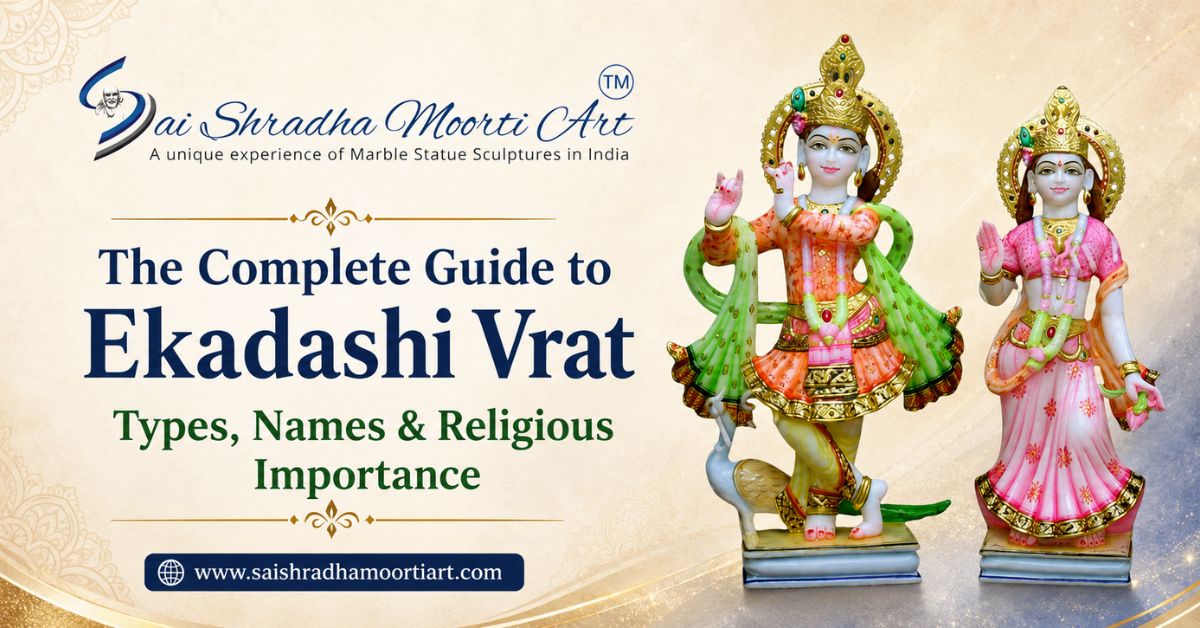
Devotees who worship Radha Krishna at home or in temples. Ekadashi is a special occasion to offer prayers, flowers and bhajans before the divine idols of Radha and Krishna. Many families enhance their sacred spaces with beautifully handcrafted Radha Krishna murti white marble. White marble is symbolizes the purity, peace and divine grace.
There are generally 24 Ekadashis observed throughout a Hindu lunar year, each carrying unique religious importance and spiritual benefits. During Adhika Maas, two additional Ekadashis are observed, making the total 26 in some years.
What is Ekadashi Vrat?
Ekadashi Vrat is a sacred Hindu fasting day observed on the 11th day of both the waxing and waning moon phases which is dedicated to Lord Vishnu.
Meaning of Ekadashi
The word "Ekadashi" is derived from Sanskrit, where "Eka" means one and "Dashi" means ten, together representing the eleventh lunar day. Ekadashi occurs twice every lunar month—once during the Shukla Paksha waxing phase of the moon and once during the Krishna Paksha waning phase.
Origin of Ekadashi
According to Hindu mythology, Ekadashi Devi incarnate from the divine energy of Lord Vishnu. She destroy the demon Mura. Pleased with her devotion and strength Lord Vishnu granted her the blessing. Devotees who observe the Ekadashi Vrat would receive spiritual purification and divine blessings.
This divine connection makes Ekadashi one of the most important fasting days for followers who worship Lord Vishnu and Lord Krishna.
Why Devotees Observe Ekadashi Fast
Devotees observe Ekadashi fasting for various spiritual purposes:
1 To purify the mind and body.
2 To seek the blessings of God Vishnu.
3 To develop self control and discipline.
4 To reduce attachments to material desires.
5 To progress on the path of spirituality.
During these sacred moments many devotees worship before a handcrafted marble idol of Radha Krishna. These idols create a peaceful environment for meditation and prayers in their homes or spiritual centers.
Religious Importance of Ekadashi
Significance in Hindu Scriptures
The importance of Ekadashi is described in various Hindu scriptures. Including the Padma Purana, Skanda Purana and Bhavishya Purana. These texts explain the spiritual power of fasting and devotion performed on Ekadashi.
The Vaishnava tradition especially regards Ekadashi as a highly sacred day dedicated to Lord Vishnu and his incarnations, including Lord Krishna.
Importance of Worshipping Lord Vishnu on Ekadashi
On Ekadashi devotees perform Vishnu puja, chant "Hare Krishna" sacred mantras and recite the Vishnu Sahasranama. Worshipping Radha Krishna with devotion is also considered extremely auspicious.
At Sai Shradha Moorti Art we create divine marble idols. These idols helps to devotees establish a serene prayer space. As experienced marble statue manufacturers in Jaipur, our artisans craft exquisite Radha Krishna statues using traditional techniques and premium-quality marble.
Types of Ekadashi Vrat
Smarta Ekadashi
Smarta Ekadashi is generally observed by devotees who follow the Smarta tradition. The fasting rules are based on traditional Hindu calendar calculations and include prayer, meditation and dietary restrictions.
Vaishnava Ekadashi
Vaishnava Ekadashi is especially followed by devotees of Lord Vishnu and Lord Krishna. It may be observed on a slightly different day than Smarta Ekadashi due to specific Vaishnava calendar calculations.
Nirjala Ekadashi
Nirjala Ekadashi is considered the strictest form of Ekadashi fasting, where devotees abstain from food and even water for the entire day. It is believed to grant the benefits of observing all 24 Ekadashis.
Other Forms of Fasting
Many devotees follow different fasting methods based on their health and traditions:
1 Water-only fasting.
2 Fruit fasting (Phalahar).
3 Consumption of milk and fast friendly foods.
4 Partial fasting with simple sattvic meals.
Complete List of 24 Ekadashi Names and Their Significance
Ekadashi in Chaitra
Papmochani Ekadashi – Removes past sins and purifies the soul.
Kamada Ekadashi – Believed to fulfill righteous desires.
Ekadashi in Vaishakha
Varuthini Ekadashi – Provides protection and spiritual progress.
Mohini Ekadashi – Helps devotees overcome worldly attachments from material things.
Ekadashi in Jyeshtha
Apara Ekadashi – Associated with forgiveness and removal of negative karma.
Nirjala Ekadashi – The most rigorous and spiritually powerful fast.
Ekadashi in Ashadha
Yogini Ekadashi – Promotes purification and well-being.
Devshayani Ekadashi – Marks the beginning of Lord Vishnu’s divine sleep period.
Ekadashi in Shravana
Kamika Ekadashi – Dedicated to obtaining Lord Vishnu’s blessings.
Putrada Ekadashi – Associated with family happiness and progeny.
Ekadashi in Bhadrapada
Aja Ekadashi – Helps in attaining spiritual freedom.
Parivartini Ekadashi – Celebrates Lord Vishnu changing his resting position.
Ekadashi in Ashwin
Indira Ekadashi – Dedicated to the peace of ancestors.
Papankusha Ekadashi – Believed to destroy sins and grant virtues.
Ekadashi in Kartika
Rama Ekadashi – Associated with Goddess Lakshmi and prosperity.
Devutthana (Prabodhini) Ekadashi – Marks Lord Vishnu awakening from Yoga Nidra.
Ekadashi in Margashirsha
Utpanna Ekadashi – Celebrates the appearance of Ekadashi Devi.
Mokshada Ekadashi – Associated with liberation and Bhagavad Gita teachings.
Ekadashi in Pausha
Saphala Ekadashi – Represents success and spiritual accomplishment.
Putrada Ekadashi – Brings blessings related to family & childrens.
Ekadashi in Magha
Shattila Ekadashi – Emphasizes charity and the purification.
Jaya Ekadashi – Symbolizes victory over negativity.
Ekadashi in Phalguna
Vijaya Ekadashi – Provides success and triumph over obstacles.
Amalaki Ekadashi – Dedicated to Lord Vishnu and the sacred Amla tree.
Adhika Maas Ekadashi (Extra Ekadashis)
What is Adhika Maas?
Adhika Maas, also known as Purushottam Maas, is an additional month added to the Hindu lunar calendar approximately every three years to maintain balance with the solar calendar. This sacred period is considered highly auspicious for spiritual practices, and devotees especially worship Radha Krishna in purushottam maas to seek divine blessings, love, peace, and spiritual growth.
Padmini Ekadashi
Padmini Ekadashi is observed during Adhika Maas and is believed to provide great spiritual merit, purity, and the blessings of Lord Vishnu.
Parama Ekadashi
Parama Ekadashi is another sacred fast of Adhika Maas associated with liberation, devotion, and the removal of sins.
Ekadashi Vrat Rules and Rituals
Preparation Before Ekadashi
Devotees prepare for Ekadashi by following a pure and sattvic lifestyle. They often avoid non vegetarian food, excessive spices and negative thoughts before beginning the fast.
What to Do on Ekadashi
Common practices include:
1 Observing the fast with devotion.
2 Chanting Lord Vishnu’s names.
3 Reading the Bhagavad Gita.
4 Performing meditation and prayers.
5 Visiting temples and offering flowers with handmade prasad.
A beautifully carved radha marble murti can become the center of devotion during these prayers, bringing a divine presence into homes and sacred spaces.
Foods Allowed During Ekadashi Fast
Commonly allowed foods include:
1 Fruits.
2 Milk and dairy products.
3 Dry fruits and nuts.
4 Sabudana, singhara flour, and other fasting ingredients.
Foods to Avoid
Devotees traditionally avoid:
1 Rice.
2 Wheat.
3 Lentils.
4 Certain vegetables and grains.
How to Break the Ekadashi Fast “Parana”
Importance of Parana
Parana is the ritual of ending the Ekadashi fast at the prescribed time on Dwadashi the twelfth lunar day. Performing Parana at the correct time is considered spiritually important.
Parana Rules
1 Begin with simple and sattvic food.
2 Offer prayers before consuming meals.
3 Avoid the overeating immediately after the fast.
Experience Divine Craftsmanship with Sai Shradha Moorti Art
The beauty of Ekadashi worship becomes even more special when devotees pray before a divine representation of Radha Krishna. At Sai Shradha Moorti Art we are dedicated to preserving traditional craftsmanship and creating premium marble idols for homes, temples and spiritual spaces.
Our collection includes elegant 1 to 3 feet radha krishna marble statue creations. All Radha Krishna marble idols crafted by skilled artisans with intricately designs. We are manufacturer and offer a small home temple idol to a grand marble statue. Our expertise as trusted marble craftsmen helps bring divine artistry into every sacred space.
Conclusion
Ekadashi Vrat is a sacred journey of devotion, self discipline and spiritual purification. This fast brings devotees closer to Lord Vishnu and Lord Krishna. By observing this holy fast with sincerity and worshipping divine forms like Radha Krishna One can create an atmosphere of peace and positivity. At Sai Shradha moorti Art. We offer exquisitely handcrafted Goddess Radha and Lord Krishna marble moorti from Jaipur, that add divine beauty to every home temple and sacred space.